Kaitag Flag §
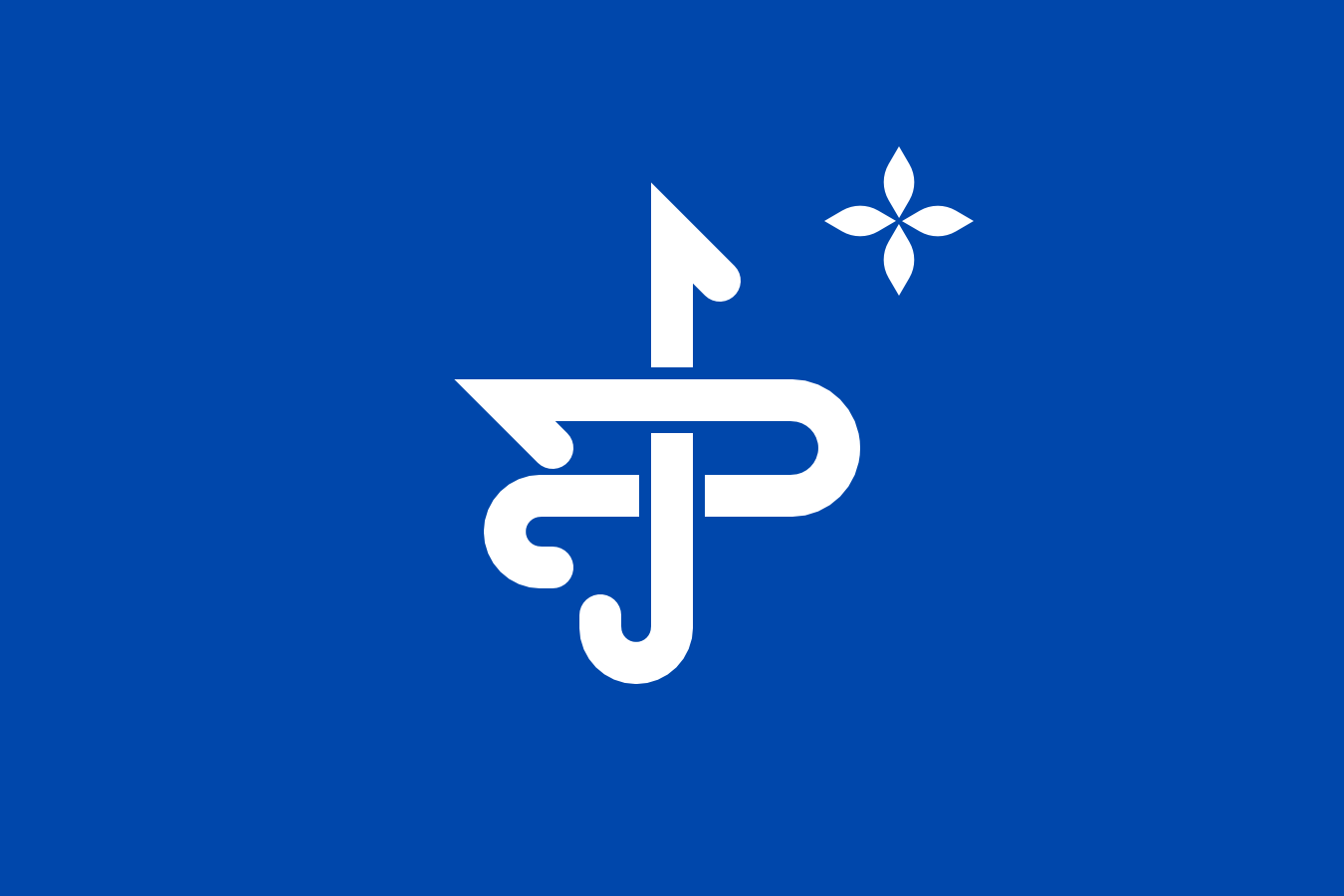
The flag of the Kaitag (Хайдаҡӏла) is a blue field with a white seal at its center.
The stylized Kufic monogram from the pantheon of the rulers of Kaitag symbolizes centuries-old statehood.
Above and to the right — a white four-leaf madder flower, once abundantly cultivated across Kaitag.
Deep blue — the traditional ground of Kaitag embroidery.
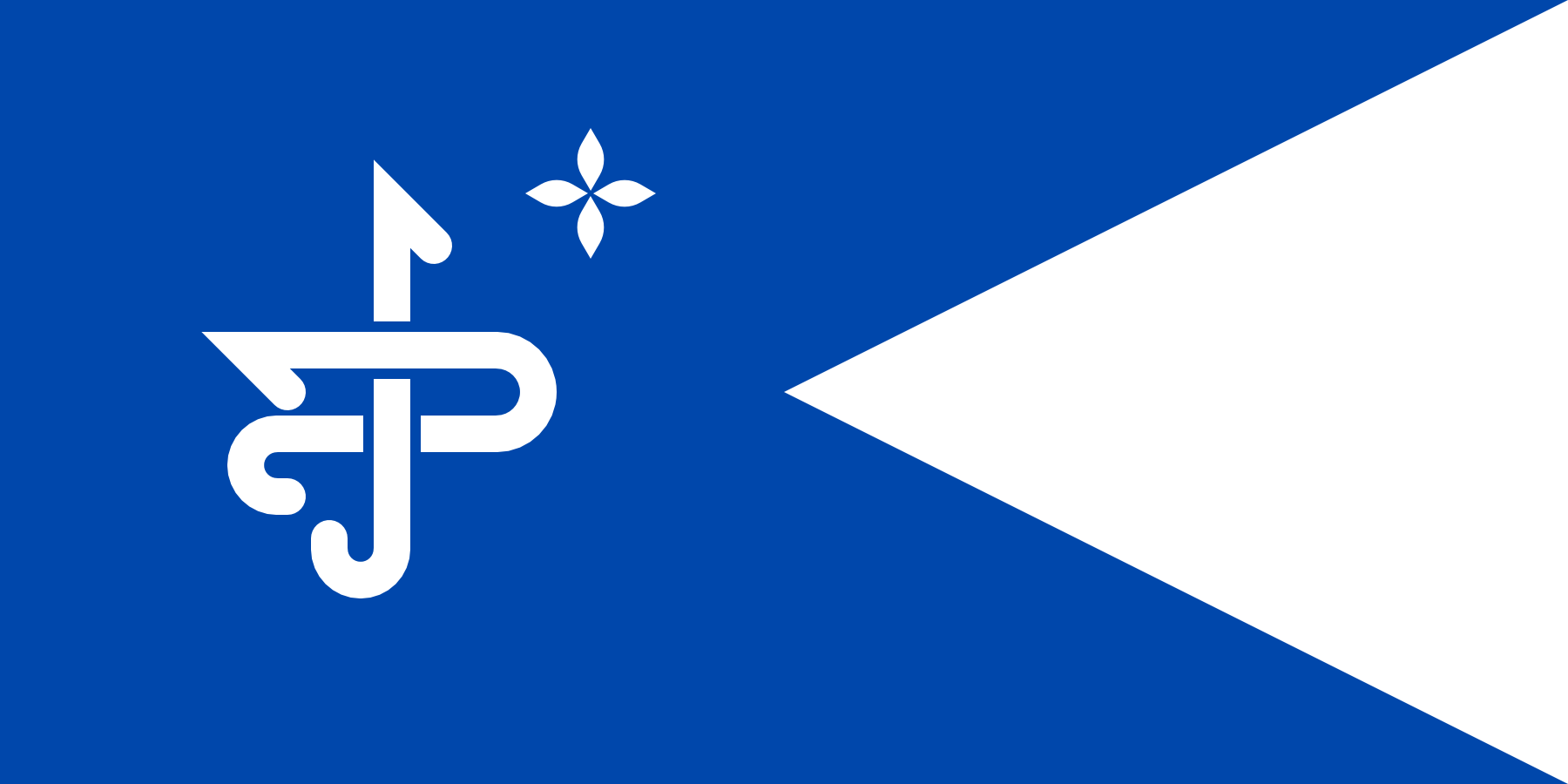
Proportions 2:3 (swallowtail 1:2). Color #0047AB / PMS 300 C.
Monogram §
The central element from a 13th-century ruler's sarcophagus:
On the end face of the sarcophagus, shaped as a pointed arch, a multi-figured relief composition is carved: on either side of a highly stylized tree stand two lions. [...] The top of the tree is crowned by a medallion figure with a pointed tip and a scalloped inner edge. Enclosed within the medallion is a relief sign in the form of a monogram, likewise inspired by Arabic letters.
— M. M. Mammaev, 2014. Art of Zirikhgeran-Kubachi of the 13th–15th Centuries and Its Place in the System of Artistic Cultures of East and West
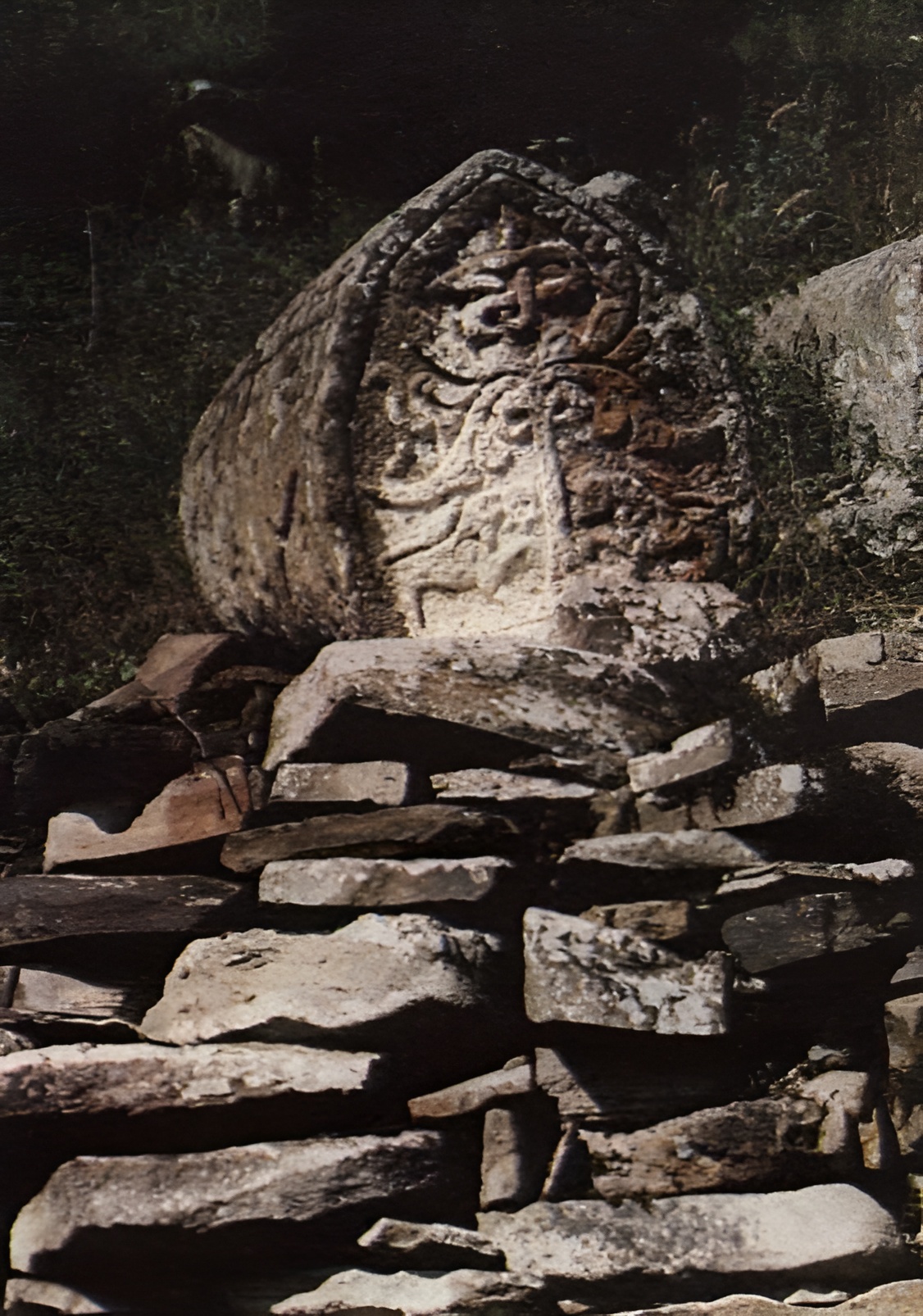
The main sarcophagus. M. G. Magomedov, A. R. Shikhsaidov, 2000. Kalakoreish (The Fortress of the Quraishites)
Madder Flower §
A four-petal flower of Kaitag's key dye crop:
Madder grew in abundance in Kaitag: many had whole plantations of it, from which they earned more income than from growing wheat. Other dye plants also grew here and were used as colorants for silk threads. All these factors contributed to Kaitag becoming the center of Kaitag embroidery production.
— Z. I. Gasanova, F. A. Gadzhalova, 2022. Kaitag Embroidery: from its origins to the future
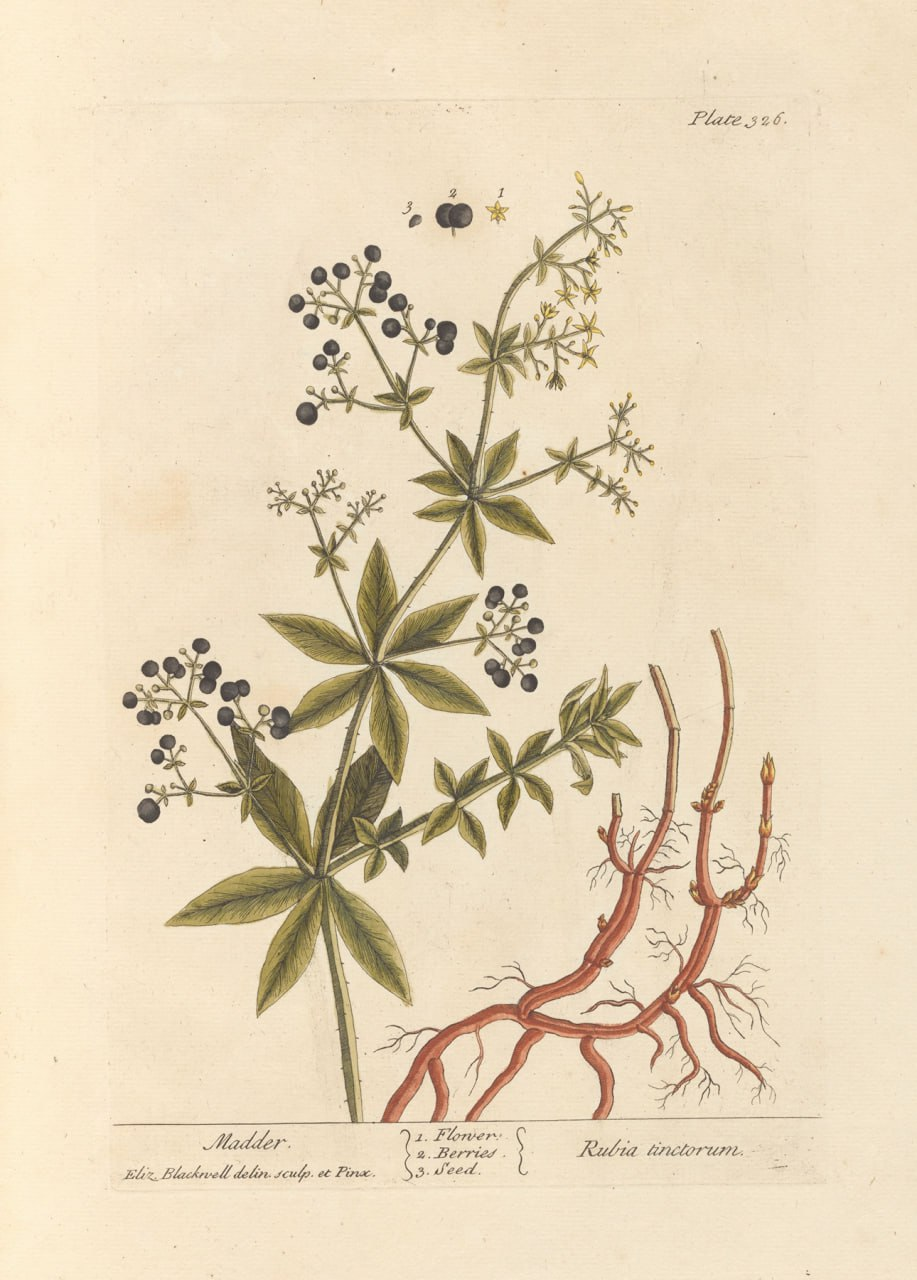
Rubia tinctorum. Franz Eugen Köhler, 1887. Köhler’s Medizinal-Pflanzen
Deep Blue §
The traditional ground of Kaitag embroidery:
The term "Kaitag embroidery" was introduced into scholarly use by the prominent ethnographer and Caucasus specialist E. M. Shilling. [...] he wrote of the "cottage production" of "cushion embroideries" among the Kaitags: "The cushion embroideries are large rectangular pieces of homespun fabric (of linen, hemp, or cotton), dyed dark blue and embroidered in large satin stitch."
— Z. I. Gasanova, F. A. Gadzhalova, 2022. Kaitag Embroidery: from its origins to the future
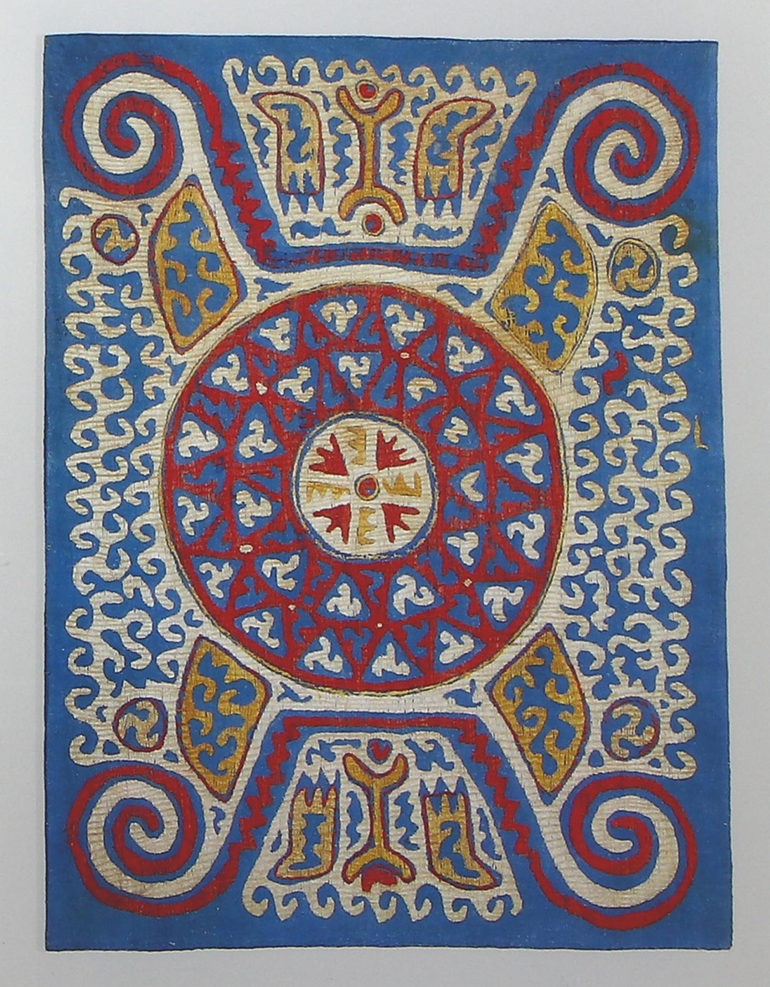
"Spiraling Horns." R. Chenciner, 1993. Kaitag: Textile Art from Daghestan
Swallowtail §
The two-tailed shape of the Caucasian War epoch:
No. 3. Banner of Eldar-Bek of Kara-Kaitag. White, two-tailed, without inscription. Captured in battle on August 24, 1831. The battle took place at a Muslim cemetery near Derbent, where the banner flew atop one of the forward tombs.
— Yu. U. Dadaev, 2009. The Naibs and Mudirs of Shamil
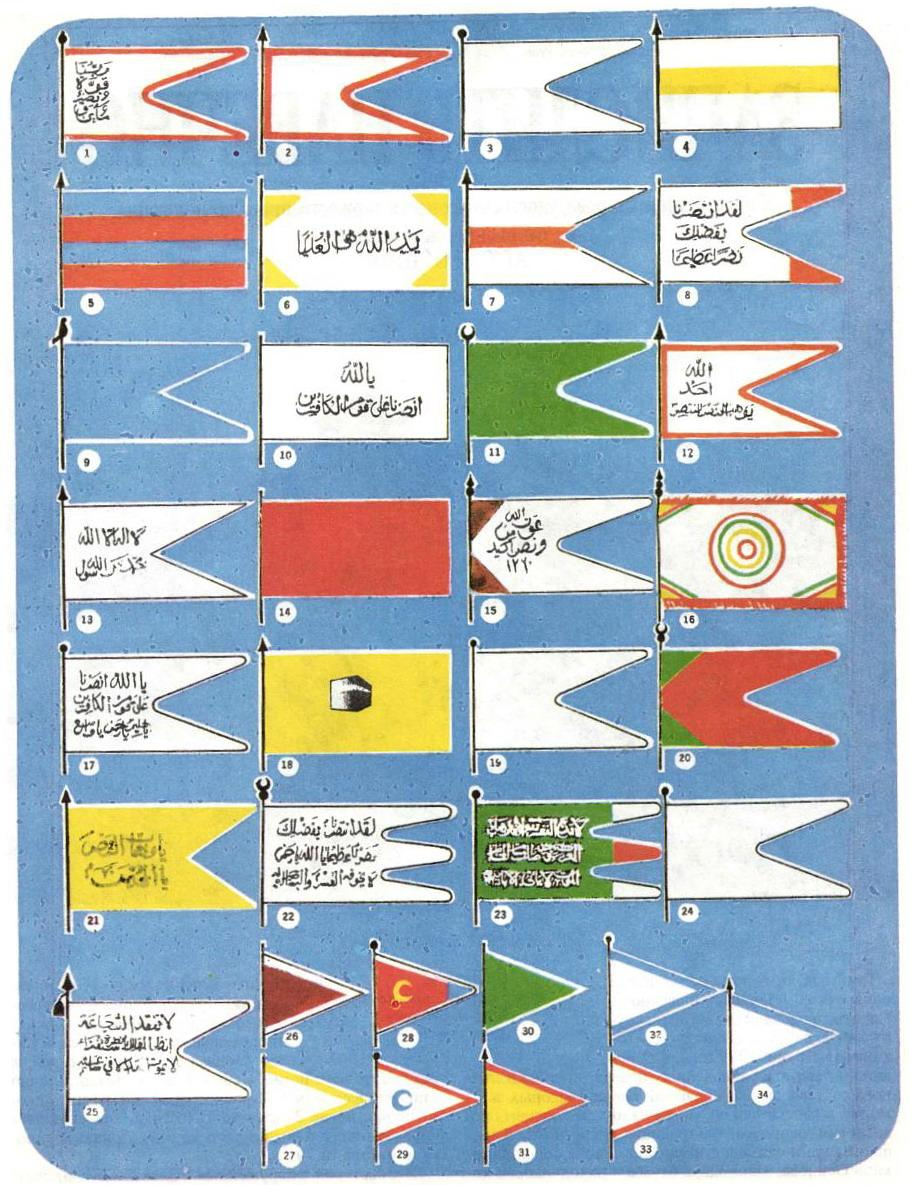
Banners of the mountain warriors. M. Korkmasov, G. Baliev, Z. Arukhov.